
Modern Slavery in Private Markets: From statements to meeting supply chain management expectations
by Dean Alborough
View post

The 2025 disclosure cycle saw over 22,000 companies responding through CDP. While scores saw an upward trend compared to 2024, the number of companies achieving an A remains limited. In 2025, only 887 companies earned a coveted spot on CDP’s A-list with only 23 achieving a triple A across climate, water security and forests. This gap highlights both the growing demand from stakeholders for environmental transparency and the increasing rigor of CDP as it expands beyond climate to incorporate nature-related disclosures.
In 2025, SLR's team supported over 50 responses covering the full range of CDP themes, helping 100% of our clients maintain or improve their scores. This included supporting global clients across industries including food and beverage, agriculture, transport, cement, chemicals, pharmaceuticals, financial services, professional services, training/service providers, telecommunications, and transport services.
After a challenging 2024 disclosure cycle, many questioned whether CDP was still a useful disclosure process. A smoother 2025 cycle helped ease some of those concerns, with more reliable platform performance and no major changes to the questionnaire or essential criteria.
At the same time, delays and rollbacks of mandatory environmental disclosure regulations occurred in some regions, including the EU (CSRD), and the US (SEC and California’s climate disclosure laws). This has reinforced CDP’s ongoing relevance for voluntary disclosure. While the future of sustainability reporting remains uncertain, voluntary frameworks like CDP continue to play an important role. The process serves as a starting point for developing regulatory-compliant disclosures. CDP is closely aligned with IFRS, GRI, TNFD, and CSRD. Responding to CDP can streamline the disclosure process by enabling the collection of data for these standards simultaneously.
Based on the latest ‘Rate the Raters survey’ [1], CDP remains one of the top Environmental, Social, and Governance (ESG) ratings. For companies and stakeholders alike, CDP is a critical tool for disclosing and comparing performance with a strong track record, establishing respondents as leaders in sustainability. It continues to encourage a more joined‑up approach to environmental issues, helping organisations strengthen their strategies and governance.
CDP scores for 2025 are now available to participating companies via the portal and on the CDP website [2] for public scores.
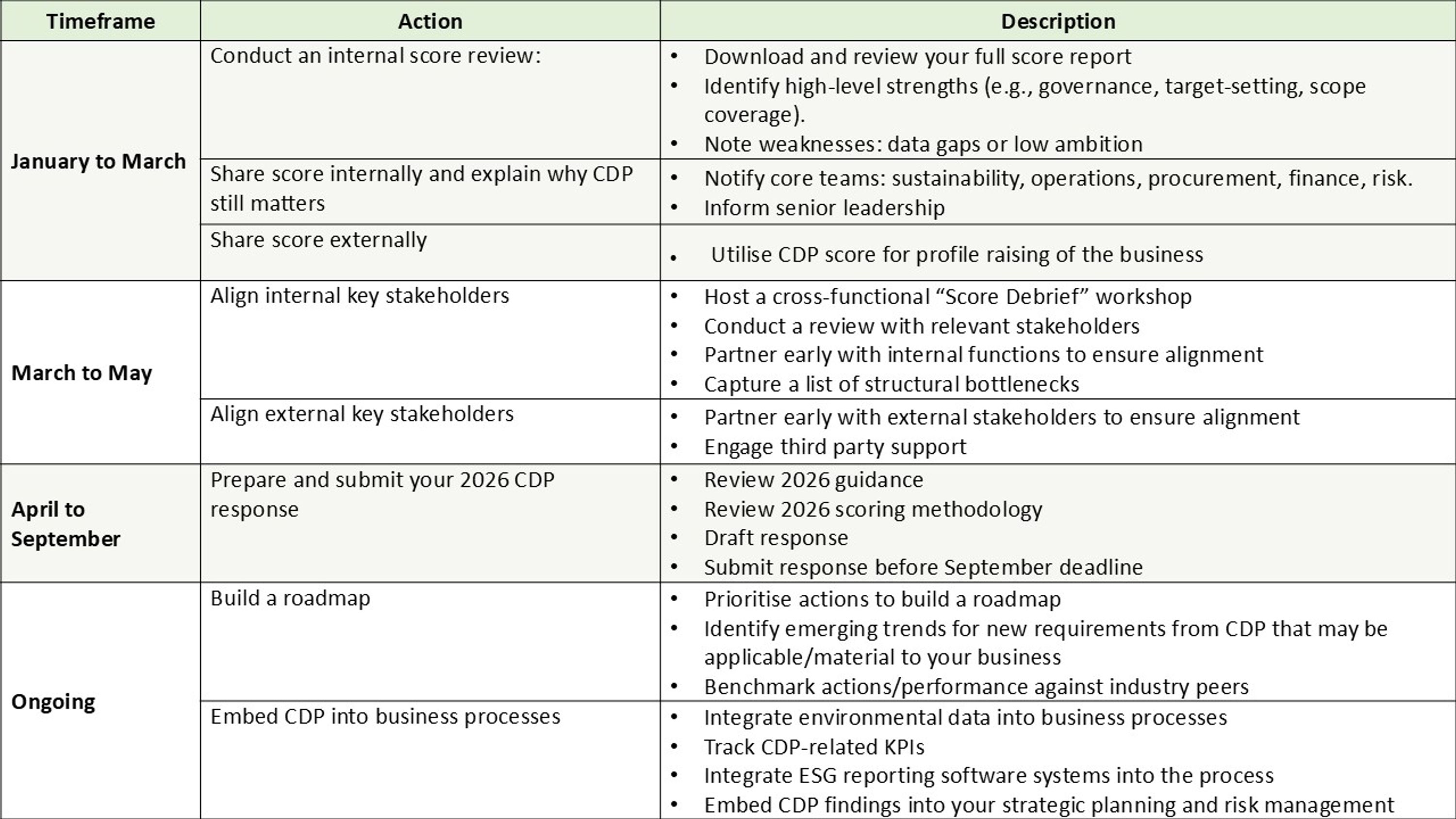
While detailed information on changes is yet to be published, an initial preview is available on the CDP website [3], which includes:
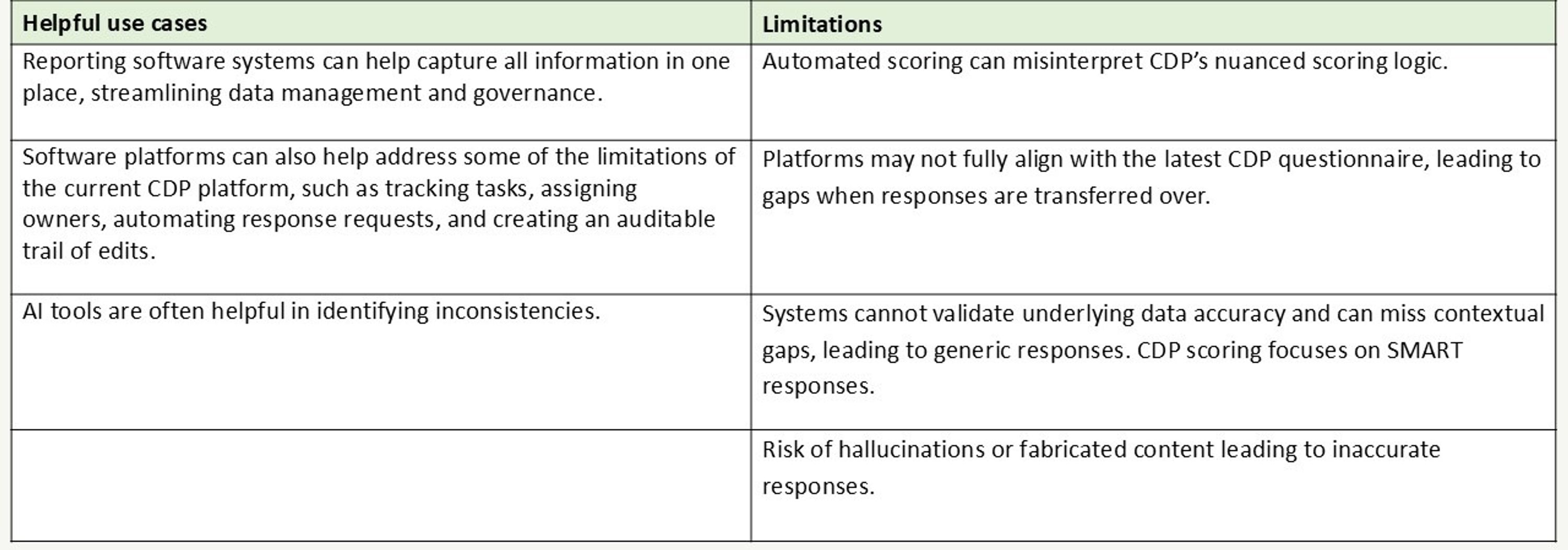
We’re increasingly seeing clients move to reporting software platforms to streamline the process across ESG ratings and annual reporting requirements. As well as integration of Artificial Intelligence (AI) for content drafting and mock scoring. Whilst this is an existing opportunity to streamline some of the reporting burden and focus on climate action. It’s important to note some of the limitations, use AI intelligently and how to build a robust process.
For many companies, CDP disclosure has felt like an annual scrambleordrawn-out process involving last-minute, rushed data collection and form-filling to meet deadlines. But as CDP evolves, the real value lies in:
If you’d like support with assessing your results or completing CDP or wider ESG disclosure improvement actions in 2026, please reach out to our CDP reporting services team.
Get in touch