Seeing through climate-related financial disclosures

Post Date
28 July 2026
Read Time
2 minutes
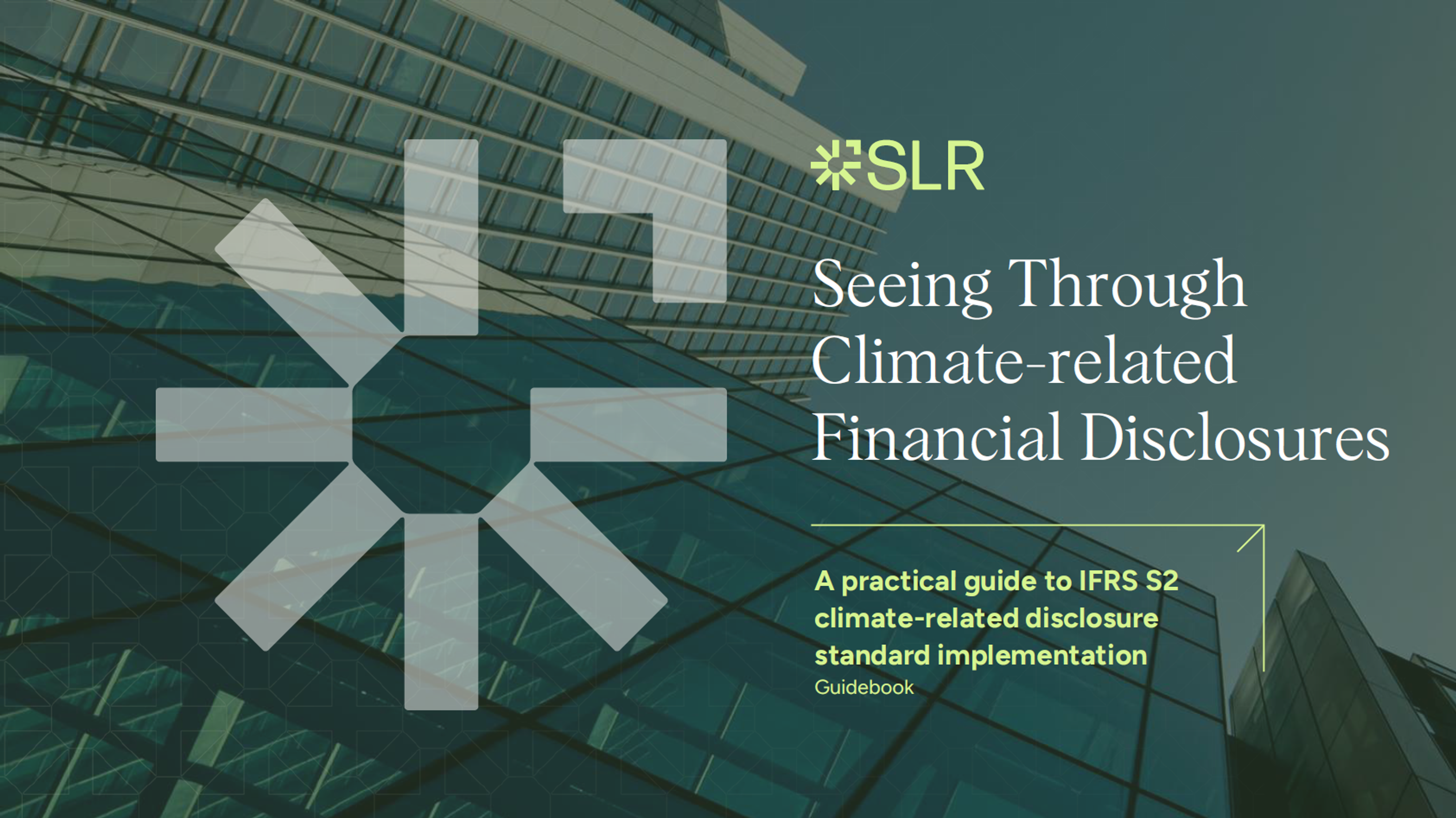
Front cover of 'seeing through climate-related financial disclosures'

A practical guide to IFRS S2 climate-related disclosure standard implementation

A regime change is underway in climate-related financial disclosures, driven by the introduction of IFRS S1 and S2. Developed by the International Sustainability Standards Board (ISSB), the standards are fast becoming the global baseline for investor-focused sustainability disclosures, requiring organisations to demonstrate how sustainability-related risks and opportunities could affect financial performance and long-term value creation.

While IFRS S2 is closely aligned with the recommendations of the Task Force on Climate-related Financial Disclosures (TCFD) and retains the familiar structure of governance, strategy, risk management, and metrics and targets, it introduces a number of important clarifications, enhancements and mandatory disclosure requirements.

Our new guidebook, Seeing Through Climate-related Financial Disclosures, explores the practical implications of implementation and highlights the areas finance, climate risk and sustainability practitioners should prioritise as disclosure expectations continue to evolve.
Seeing Through Climate-related Financial Disclosures

Key recommendations from our experts include:

  1. Applying financial materiality: Understand which sustainability-related risks and opportunities could reasonably affect enterprise value and investor decision-making.
  2. Achieving value chain granularity: Identifying where climate-related risks and opportunities sit across operations, supply chains and business models
  3. Reporting financial effects: Strengthening the connection between sustainability issues and financial performance through more integrated disclosures.
  4. Moving from scenario analysis to resilience: Demonstrating how climate scenarios inform strategic decision-making and organisational resilience.
  5. Embedding climate risk into business risk: Integrating sustainability considerations into governance, risk management and capital allocation processes.

Drawing on experience supporting organisations worldwide, the guide provides practical insights on how businesses can navigate implementation challenges while improving the quality and credibility of their sustainability-related financial disclosures.

Download the guide to explore the evolving expectations of IFRS Sustainability Standards and what they mean exactly for your organisation.

Download

IFRS S1 and S2 are a hard reset for how climate and sustainability risks are considered by investors. We've helped clients across the world turn IFRS Sustainability Standards into a decision-making tool. Reach out to see what that could look like for your business.

Recent posts

  • Resiliencia climática y su impacto en Chile y América Latina
    Insight

    06 August 2026

    5 minutes read

    Gestionar el riesgo climático: una necesidad estratégica para las empresas

    by Sofía Díaz , Cristian Rencoret


    View post
  • Discarding edible food continuously harms the planet, wastes resources, and denies nourishment to those most in need.
    Insight

    30 July 2026

    4 minutes read

    Supporting NSW’s transition to net zero: What the new food waste separation requirements mean for businesses

    by Andrew Quinn


    View post
  • An audience listen to a speaker
    Insight

    29 July 2026

    5 minutes read

    Stakeholder engagement: A critical path for onshore wind success (part one)

    by Esther Diffey


    View post
See all posts