
Proposed Accepted Development Requirement updates for constructing or raising waterway barrier works: what you need to know
- Post Date
- 09 October 2024
- Read Time
- 3 minutes
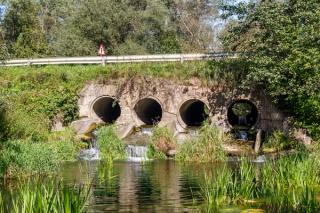
In Queensland, development that involves the construction or raising of waterway barrier works (WWBW) (e.g. weirs, culverts, bed level crossing, temporary instream works) requires authorisation under the Planning Act 2016. Our Aquatic Environmental Services team has experienced and suitably qualified aquatic ecologists and fish biologists that can provide specialist advice to proponents of proposed WWBW to ensure compliance with current and proposed changes to WWBW guidance.
Currently, approximately 14% of WWBW developments are assessable development. An assessable development means that it requires development approval and demonstrated achievement of the Performance Outcomes of State Code 18. The remaining 86% of WWBW are accepted development, meaning that the developer is required to provide notification of the proposed works and ensure that the design of the proposed works achieves the Accepted Development Requirements (ADR) for constructing or raising WWBW. Advice from experienced aquatic ecologists and fish biologists can reduce the time required to obtain the required approvals via either of these pathways.
Recently, the Queensland Department of Agriculture and Fisheries initiated the process to update the current ADR.
What are the proposed changes?
The proposed changes to the ADR include an improvement on general formatting, incorporation of new figures and guidance boxes, but more importantly incorporating stakeholder feedback received over the past six years. This feedback has resulted in new proposed accepted development designs that are likely to assist remediation initiatives, including initiatives that require implementation under the Reef 2050 Plan.
Additional changes in the draft updated ADR include:
- The method used to assign a colour code (green, amber, red, purple, grey) to an unmapped waterway.
- The format of notification forms.
- Accepted design changes for single span and multi-span bridges on green and amber waterways.
- Increased requirements for incorporation of roughening elements in culvert designs on all waterways.
- Accepted designs for remediation works, including:
- Pile fields used to address bank erosion.
- Retrofitting baffles in culverts.
- Design of rock chutes used to address bed erosion.
- Interim fishways on low weirs, culverts and causeways.
- Retrofitting nib walls to culvert arrays to achieve a ‘low flow’ culvert cell.
- Discontinuing maintenance of existing floodgates as accepted development.
- Requiring new notification and design requirements for all temporary barrier works, including those used during construction of permanent waterway barrier works, as well as new spatial and temporal limitations for temporary waterway barrier works.
If you have any queries in relation to the potential implications these proposed changes may have to your operations or upcoming developments, get in touch with our experts to discuss your options.
Image caption: The ADR provides guidance for waterway barrier designs, including culvert designs, to ensure acceptable and positive fish passage outcomes are achieved, and avoid designs such as shown in the photograph that do not achieve fish passage outcomes.
Recent posts
-
-

Chile lidera América Latina en el Sustainability Yearbook 2026 de S&P Global
by Germán Saenz
View post -